
The criminology theory of self-control theory was developed by Travis Warner Hirschi and Michael Ryan Gottfredson in the late 1960s. The theory’s foundation is that the lack of individual self-control is the main factor behind criminal behavior and aims to explore why a person chooses to engage in criminal activity.

Hirschi claimed the presence or lack of effectiveness of social controls on individuals were key influences in their decisions to engage in criminal activity. Hirschi argued that persons committing crimes do so because they feel no obligation to abide by laws, norms, or rules of society to which they have no allegiance or connection.
Hirschi argued that people engage in criminal behavior when their social bonds breakdown. Hirschi identified four elements of the social bond that act as control mechanisms.
- Attachment: Having an emotional connection to others
- Commitment: Dedication to conventional activities and goals
- Involvement: Participation in legitimate activities
- Belief: Adherence to societies laws, rules, norms, and values
Hirschi and Gottfredson identified key ideas of self-control theory:
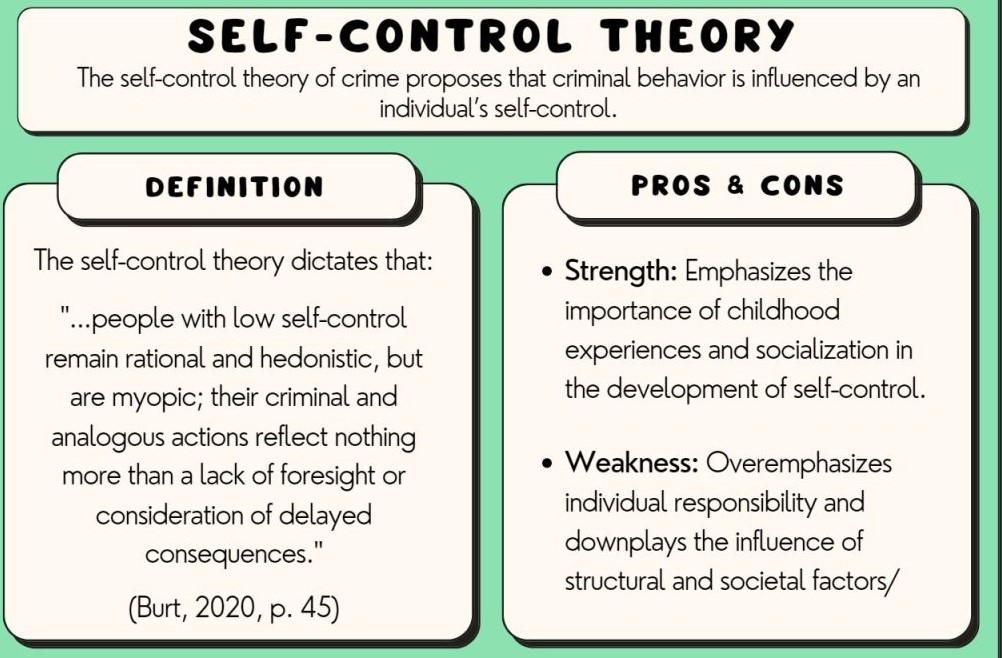
- Motivation: people are motivated by self-interest and the pursuit of pleasure, while avoiding pain.
- Self-control: Is the ability to delay immediate gratification in favor of longer-term interests. People with low self-control are more likely to engage in impulsive behaviors without considering the consequences.
- Social controls: Social groups establish controls to channel the pursuit of wants in ways that minimize harm to others.
- Risk-taking: People with low self-control are more likely to engage in risky behaviors, such as unwed pregnancies, illicit sex, smoking, drinking, drugs, gambling, divorce, and accidents.
Hirschi insisted that self-control theory emphasizes the importance of social institutions, interpersonal relationships, and cultural influences in regulating human behavior. Hirschi stated that self-control theory can help inform strategies for crime prevention and interventions.
______________________________________________________________________
About the Author
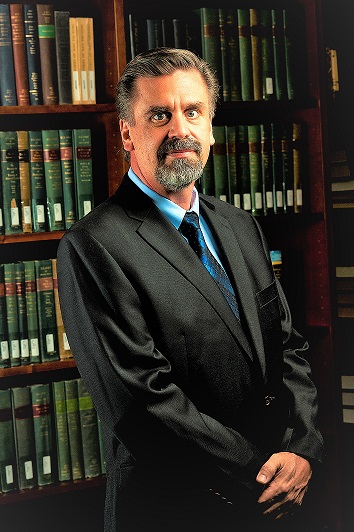
Mark Bond has worked in law enforcement and has been a firearms instructor for more than 33 years. His law enforcement experience includes the military, local, state, and federal levels as a police officer and criminal investigator. Mark obtained a BS and MS in criminal justice, and M.Ed in educational leadership with Summa Cum Laude honors. Mark has a doctoral degree in education (EdD) with a concentration in college teaching and learning. Mark is currently an associate professor of human justice studies and teaches undergraduate and graduate criminal justice courses.
 e-Roll Call Magazine