A scholarly tone is the voice of the academic writer, and it is intended to be directed at the academic audience. A scholarly tone is professional and speaks directly to the profession and discipline using familiar terminology that is direct, objective, and formal. A scholarly tone in your academic writing adds credibility to your argument or position and is persuasive.
A scholarly tone avoids bias and does not give personal statements and avoids emotional of inflated language using jargon and slang. A scholarly tone in your academic writing uses formal wording which avoids contractions, colloquialisms, and first and second person pronouns such as “I” and “We”.
To help establish a scholarly tone the writer needs to use the third person narrative voice in their academic writing. Using a neutral voice will allow the writer to focus on analyzing the published scholarly literature and checking personal bias in the tone, adding credibility. Academic writing should be factual and avoid personal opinions.
Writing clearly and avoiding complicated sentence structures and wordiness. Avoid run-on sentences. Avoid using rhetorical questions in your academic writing.
A scholarly tone avoids broad generalizations by avoiding phrases such as “always” or “never”. A scholarly tone also avoids over-sweeping adjectives such as using the words “outstanding” or “obvious”. Avoid using adverbs such as “really” or “clearly”. Avoid using qualifiers in your academic writing such as “a little” or “definitely”.
By citing your sentences and using in-text citations shows the reader that your writing is informed not by personal opinions but shows that the writer is engaged with the larger body of published literature on the topic being discussed. All the writer’s assertions are supported, which adds credibility to your academic writing.
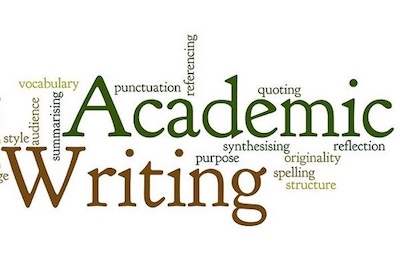
A scholarly tone helps your academic writing to be taken seriously in a formal academic environment such as writing a term paper or exam essays.
_____________________________________________________________
About the Author
Mark Bond has worked in law enforcement and has been a firearms instructor for more than 33 years. His law enforcement experience includes the military, local, state, and federal levels as a police officer and criminal investigator. Mark obtained a BS and MS in criminal justice, and M.Ed in educational leadership with Summa Cum Laude honors. Mark has a doctoral degree in education (EdD) with a concentration in college teaching and learning. Mark is currently an associate professor of human justice studies and teaches undergraduate and graduate criminal justice courses.